
Dry the Rain
When you're having one of those days, how music can be the virtual hug that you need. By Katie Sloane


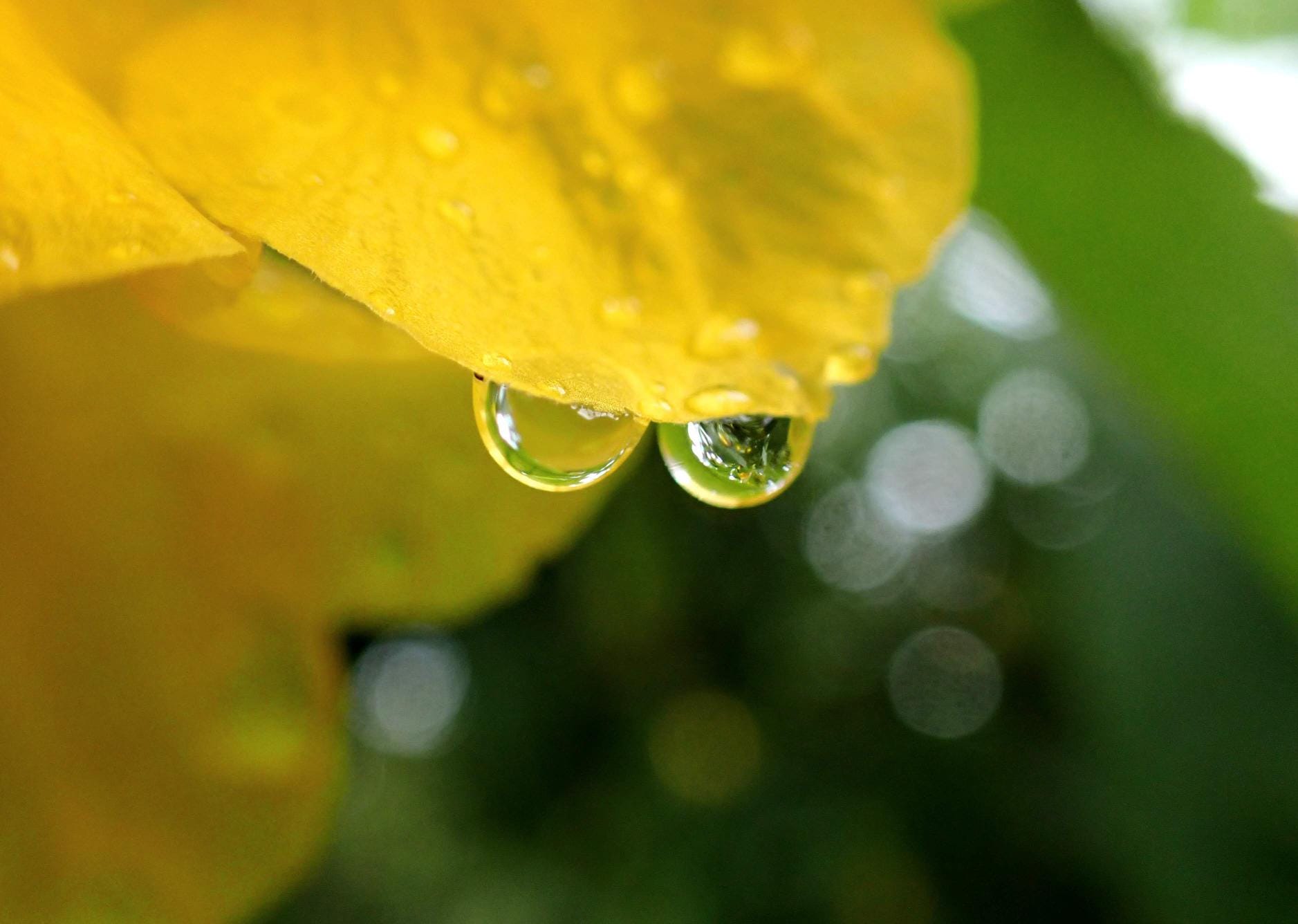
The rainy season seems relentless at this time of year. Daily, nightly, vicious storms lash the house with violent gouts of rain; sheets of it pour endlessly from above, rendering the view from our windows misty and nightmarish: dark trees, hunched and drenched under the onslaught of water, flail sorrowfully under tempestuous winds; waves of water convulse under the ghostly light of the streetlamps outside; the pall of wet TV-static falls unabated while we listen to the house creak and settle, standing its ground under this new attack.
When we’re watching TV, when we’re making dinner or brushing our teeth before bed, the tell-tale rumble signals another potential assault. Will the storm skirt around us, treating us only to a distant light show of intermittent flashes that unnerve the dogs and make them bark and shiver and huddle close to us? Or will it unleash its rage and strike down upon us with great vengeance and furious anger?
The other night was one such wrathful attack — a fitting end to what had been a turbulent day of quietly seething, hormonal rage. As I was drawing the curtains closed in the bedroom, the rain, having abated somewhat, was just drizzling now: halos of lamplight spotlighted the clean wet mirror of a shallow flood on the road outside. A blinding flash — of Los Alamos intensity — drew a searing crack that shuddered into booming life promising an irate invective of biblical proportions; my feet absorbed the reverberations through the tiled floor, before it trembled away into a juddering echo. Fascinated by storms from an early age, I kept the curtains half open, in case another strike should follow and I’d be lucky enough to see the fork of lightning. Distant glimmers lit up the horizon like a too-close-for-comfort warzone as the rain started to pelt harder. Occasionally, bursts of light caught droplets mid air in a freeze-frame of stormy carnage. It was coming.
And I was in awe then; of its power and potential for destruction: enthralled by the filigreed patterns of electricity it could hurl against the sky; but fearful too — of its destructive, absolute power; wild and unpredictable. Drawn to it, like a dark, seductive mentor, I watched it for a while before climbing reluctantly into bed.
That night, trying to sleep, curtains closed now, flickers of light permeated the curtains, sudden surges of electrical power illuminated, flooded the dark room as the thunder closed in, rolled and pounded the house in growls of temper. As the hush of the rain crescendoed, the all too familiar thud of a single drop hammered the ceiling above us from the roof, tapping a regular tempo of worry into my brain and an already sleepless night. I lay awake for what seemed like hours listening to the turbulent turns of the storm outside, restless yet overtired, picturing in my mind’s eye the bright radar images of blue, green, yellow — orange — passing over our heads; visualising the intensity of the pummelling and crashing as abstract shapes of colour, half-wishing I had the energy to offload the day’s tensions in such a violently spectacular manner.
I used to feel comforted by hearing the rain outside while I was safely tucked up in bed, knowing I was safe and warm from the elements outside — it usually tired itself out by morning. I’d wake, then, to a new day flushed in sunshine, the day washed clean by the night’s rain. Now though, it fills me with unease — not just for the inevitable flooding that tropical storms promise in our already saturated neighbourhood of reclaimed swamp, but also of those unfortunate to be outside in this, exposed to the elements without the protection of double glazing and a solid roof to shield them from the cacophonous frenzy that seethes and prowls. And the monotonous thud, thud, thud above me that I know in the morning will show itself as a new welt on the plaster, dark and glowering, grinning its Cheshire Cat promise of inevitable decay — are we ever really that safe from such storms — real or imagined? I can picture then, catastrophising in the gloom of the dark bedroom, shapes materialising out of nothing as I lay wide awake alert to the threats outside and those posturing within my mind, the ceiling collapsing upon us, our roof opening up to the violent sky, dogs barking, ears back, eyes wild, caught in bursts of deafening light, soaked and terrified, with nowhere to hide. These visions flash in my mind: a horror-stricken face, a feeling of vertiginous dread, an awful premonition of disaster; snapshots of horror illuminated by each strike of lightning.
But of course it doesn’t happen, and at some point, my mind, exhausted by the day’s emotional torpor and its self-perpetuated paranoia, finally allows me to sleep while the storm rages itself out and my ear becomes deaf even to the continuously dripping thud.
Earlier that day, I was filled with brooding, quiet rage. I am well aware that is the title of the terrifying Stanford prison experiment — terrifying in that a group of average, apparently well-adjusted, passed-all-the-psychological-screening-tests people could inflict such awful abuses onto each other. Terrifying in that the same group of average, well-adjusted, passed-all-the-psychological-screening-tests people, could believe the roles they had been assigned and be so traumatised and disturbed at what was happening that the experiment had to be called off after barely one week.
And while it may seem a bit of a leap connecting my perhaps age-related or ‘feeling slightly under the weather’ rage of that day with a groundbreaking psychological study, it demonstrates how I felt: that all too real, visceral ire seething just beneath the placid surface of my work persona, barely contained under a calm exterior of apparent control. But then nothing happens in a vacuum. And no matter how improbable or overactive my emotional responses were that day, thinking does indeed make it so.
It was one of those days that no matter how hard you try, you still feel like nothing is good enough — failing at work and at home — overwhelmed by emails and messages and deadlines; you try to carve out time to get on top of things but it’s eaten away by a seemingly manageable to-do list of tiny tasks that sprouts shoots and limbs, drains your energy and consumes time like Pac-Man on speed. When a minor run-in with a colleague feels like an ecological disaster of epic proportions, and the more you try to contain the oil spill, it just seems to spread and contaminate further. When the tiniest kindness makes you want to cry, or a small injustice imposed upon you from above leaves you reeling with impotent rage and you’re sat by your laptop feeling angered then numb, in a violent oscillation of emotion — all the while having to take take take and then give give give with infinite patience; your door flings open, you’re in the middle of something complicated with a million mental and physical tabs open (which is almost manageable when you’re on your own, in the zone, and you’re carefully flitting between them), but they start talking oblivious to the fact you’re screeching on a hand break turn inside your mind while on full throttle, forced to suddenly swing your attention in a different direction mid-hurtle; you turn, smile and physically give them your attention, but your mind is running a million other tasks in the background, being everything, everywhere all at once, terribly, distractedly, incompetently...
So when I’m waiting patiently while a colleague, used to holding court, assumes I have the time and need, delays his point to painstakingly explain the blindingly obvious to me. Or I’m introduced as Miss first name at a public event along with all the other female staff while the men are given the elevated introduction of MR SURNAME. Or when I’m told, repeatedly, by an older male colleague that I am surely mistaken and I was in his group last meeting (I wasn't); eyeing me accusingly: I'm sure you were there - you were definitely there (I still wasn't) and being talked over and ignored after being asked advice, yet still having to patiently sit there and waste my time while he slowly catches on to the nature of our assigned task, repeats it again, deliberately in his own voice as the penny finally falls: oh, so what we have to do is....yes, YES! Each time, stifling the urge to correct, or object, or quip, ‘skip to the end’ for fear of being branded difficult or rude, smiling and silently screaming instead.
It means that by the time I get to the supermarket to pick up a few things for dinner, it’s a genuine struggle not to hit someone.
As I wander the too narrow aisles that they’ve rearranged, yet again, meaning a quick ‘pop in’ takes longer than it should, I’m confronted by lone shoppers standing, zombie-like mid-aisle, attention sucked by their phones, oblivious to anyone around them. Three such clutter the aisle that I need to navigate. I feel the hairs on the back of my neck bristle, a flushed wave of dread shudders from my ears to my toes: I need to interact civilly without exploding — how do I get past? I take a short deep intake of breath, quickly exhale and breezily announce ‘Kor tord, ka’ (excuse me, please). I am barely acknowledged but he steps aside enough for me to sidle past. Mission almost accomplished.
I turn the corner looking for another item and the crooning seeping from the supermarket’s speakers has turned up a notch, upping its excruciatingly emotive game to almost wailing proportions. Not being able to gain the rights for the music it wants to play (apart from Boney M’s ‘Rasputin’, which has been on amusingly inexplicable repeat for the last few months), today they’re playing a re-recording of Coldplay’s early hits in the style of Thai pop. As ‘Yellow’ reaches a new high (or low, depending on your perspective — and mine, today, is clearly skewed) it takes all my resolve not to scream; I genuinely worry that I may murder someone.
By the time I get home, having taken my rage out on the new car’s litany of special noises that warn of you something you could probably quite easily delineate from your wing or rear view mirrors— (just, FUCK. OFF!) I feel a little better. I look at the sparrows twittering in the trees and the ice crystals glowing rainbow colours behind distant building clouds, and I will myself to calm. Deep breaths: in my nose, out my mouth.
So when the storm throws all its toys out of the pram later that evening in a spectacular tantrum of light, sound and rain, I feel a twinge of envy that I couldn’t — I can’t — do the same.
In the morning, standing at the window, it is as I expected: the storm has cleared leaving high streaks of cloud stretched across an otherwise blue sky; the sun, yellow and piercing, pours its benevolent light over our soaked and glittering neighbourhood; the trees drip diamonds, some a little shaggy from fallen limbs and shaken leaves. And even the flooding isn’t that bad. I sigh and slide the curtains fully open, feeling the sluggish weight of the previous day’s emotional torpor in my limbs.
In the car on the way to work — it’s been too wet to cycle — the windows are huffed up as the AC is too cold for the humid air outside. The sun magically and gradually raises minute droplets of water like a huge ray gun into a hazy mist as it makes its way up to the heavens to begin the process again. Brown pummelled leaves litter the road, and the trees, beautifully iridescent in the sunlight, look fresh and revitalised, in this promise of a new morning. The heaviness in my head starts to lift a little too.
I wind down the window so I can see out and keep the wipers on to erase the fog of condensation that instantly regrows as I turn onto the main road. Spotify’s made-for-me playlist begins the jangly intro chords of The Flaming Lips’ ‘Do You Realize?’ If you don’t know the song, the lyrics gently slip between gorgeous sentiments of ‘we’re floating in space’ and ‘happiness makes you cry’ — each line foregrounded by the uplifting choral surge of the titular words — and the devastating axiom, ‘that everyone you know someday will die.’ Despite its apparent bleak acknowledgement of a truth most of us try not to think about, Coyne reminds us that much of what we hold to be true is an illusion — like the sun going down — caused by the earth spinning round. A dizzying reminder that we knowingly couch our language in comforting untruths to anesthetise ourselves from the staggering enormity of reality. And while this song has the potential to fill us with existential terror — much more philosophical and simultaneously abstract yet horrifyingly real than that which I’d felt the night — the day — before, even amongst all that frustration — an earth shattering apocalypse; the promise of not being here with all you hold dear gone — the uplifting key changes and rhythmic return to beauty and happiness instead lulls you into a peaceful acceptance: a floaty feeling, like that when scuba diving, the oxygen calming all anxieties even though you know, logically, that your lungs have squished to the size of small mangoes; but instead of screaming, we placidly drift on, looking at all the pretty fish and corals – that’s just the way things are. (And, according to Tyler Durden, oxygen gets you high.)
As I sat at the traffic lights, sunlight glinting off the car in front, that line again, ‘do you realize you have the most beautiful face?' filled me with such love at the sentiment of seeing beauty in the face of oblivion, and celebrating it, my eyes brimmed with tears and I felt at once at peace and reassured that amazement and awe exist in the world. I pictured then Tyler and Marla holding hands as the buildings detonate around them: joy, beauty, love — we have to seize it when we find it, in spite of the inevitable — or maybe because of it. I thought of the baby rat I’d seen dead on the road the week before, its tiny pink feet, and white belly fur fluffy and clean; its brown pelt sodden and matted from having been in its predator’s mouth, nose turned to the ground as if in a comfortable sleep; the delicate silk of its ears, soft and thinly veined: not a mark on it. I thought also of the lovers on Keats’ Grecian Urn, caught in a perpetual pre-embrace on an instrument used to house death for mourning loved ones (the layers of meta so poly in an Inception-like maze of life and death): while beauty and youth are fleeting, their love is eternal, immortalised at the perfect moment in aaaantici——pation! They’ll forever desire, forever love and yearn, and because they’ll never kiss, they’ll never know pain or sadness. And it struck me then that love is what transcends the vagaries of physics and time and entropy and decay. (Very deep for a Thursday morning commute, I know, but that’s the power of the song, I guess.) I saw then, the earth as viewed from space, but zooming out faster and faster cinematically, time unfolding itself: this blue marble of life, a palimpsest of lives, loves, experiences, tragedies – personal and epic – if we can wrench ourselves from our subjectively cloistered lives to see the world, our galaxy, the universe, from afar, like an omnipotent and benevolent god, then what remains, even long after our earth has been swallowed by the sun, is love, emanating in atoms, twirling in the stars — changed form, sure, but never gone. And it occurred to me: this doesn’t just happen; we need to seek it, we need to make it; we need to acknowledge it and celebrate it to make it last, not just for ourselves, but for others, now and through the eons.
And while I was feeling a strange mixture of quiet terror, calm and morbid acceptance, my head reeling through racks of memory of films I’d watched or poems and books I’d read that craft this very point in a manner much more erudite and eloquent than me, grappling for some kind of confirmation, Coyne stopped singing and the guitar thrum of The Beta Band’s ‘Dry the Rain’ came on.
The gentle and steady shuffle-rhythm of the opening that underlays the song with certainty and head-nodding comfort; the optimistic bluegrass slide as the hopeful chord progression strums the rhythm while the vocals quietly present a scene of understated despair, until the yearning refrain, asking, pleading, ‘take me in and dry the rain’ to the pensive ‘dtok dtok dtok dtok dtok dtok dtok dtok’ when all other accompaniment falls away and that question is left, bereft, alone and unanswered. Falling back into the shuffle-strum, sorrowful bluegrass slides, the music repeats its sighing acceptance of its lot, but when the appeal for help comes around the second time, there’s an answer in harder, powerful guitar strums, rebelling against its folk roots, gaining confidence and joy as the refrain is sung; the bass line that initially underscores the chords then melodically spans notes and octaves as it moves down while playfully teasing higher tones before settling and rising again; and then the horns join in — the layering, the synchronicity, all of it is a homecoming. Even before the vocals told me it would be okay, the rhythm and bass promised me it really would. It had my back, it would carry me through the day, up and over life pressures; it would welcome me in, soaked from a heavy storm (laptop sodden and dripping rainwater — sorry IT!) and would hand me a towel — much as Dido said it would — and if I can just collapse my thoughts and set them down — it'll be okay. It’s a reconfirmation of something we already knew: and that affirmation: ‘I will be your light’, elongated from its original rhythm into a joyful promise, layering, repeating, supporting — we know even before it’s sounded, that it will guide us through, like a cosmic holding of hands.
As the lights turn green and the cars lurch forward, I notice the windscreen has completely cleared. The sun momentarily blinds me as it bounces off the rain-soaked car in front, I turn the corner and realise — yes. Yes. It’ll be okay. This too shall pass (that devastating line from Fleabag…) and it will. It will.
Taking in the glimmering beauty of the rain-scattered morning, I know that seeking delight in the small things can help calm the squalls inside me too. Driving the last few hundred meters to work, I understand what it is I need to do: I need to say it out loud; I need to write this down. I need to acknowledge it. Celebrate it, even. As overwhelming as the storm may feel when it comes, pounding, taunting, unpredictable, full of spite and fury, with a rage so palpable it gives life to dark visions; it can also be a force for good. If I can try to harness its power, I know it will help to abate it, leaving me free to seek joy out.
Itching with excitement now, fired up with passion, inspired by the music and the sunshine and the storm, I eagerly swing into the car park, pull up, and for want of something to record this on, grab my phone, open up the notes app and write. My thumbs move as fast as a forty-something’s thumbs can go and I get down as fast as I can all of these complex feelings in a frenzied, typo-filled rush, finding at last the tether that can help me gain control of this dark force that otherwise swirls and builds to explosive proportions: this, writing this, is my light.
Satisfied, I gather my things, breathe a sigh of contentment and open the door on the new day ahead.
Links:
 | A guest post by
|